
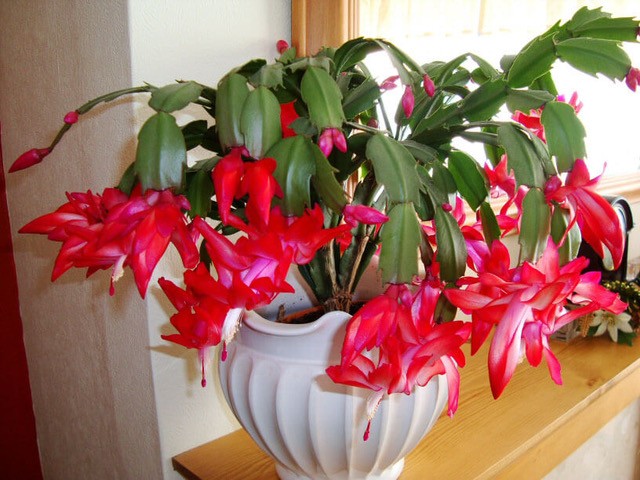

Cacti are the best-known succulents. There are over 2000 species of cacti and all but one are native to the Americas. They grow from the Arctic Circle to the mountains of Chile, but are most common in Mexico and southwestern United States. They come in many sizes and shapes, from tall and thick to short and stocky; they are frequently without branches and most often lack leaves. Cacti have scales or spines, usually referred to as needles, that range from tiny pinpoints to large treacherous barbs.
Some cacti grow in the Arctic Circle and so could probably be grown outside in Minnesota – if they were the right variety. Cacti are also very diverse so it would be difficult to know what the right variety was without a considerable amount of research. Most cacti in Minnesota are grown inside as houseplants.
Cacti, like all succulents, have thick fleshy stems of moisture holding tissue, allowing them to go for days, weeks or even months without being watered. This is why they can survive and even thrive in harsh desert-like conditions where rainfall maybe plentiful in one season and non-existent the rest of the year. Cacti are easy to grow indoors but we need to mimic their natural growing conditions. Most cacti that are grown in Minnesota are grown indoors as houseplants and probably the most popular of these are the holiday cacti.
Christmas Cactus (Schulumberga bridgesii), Thanksgiving Cactus (Shulumberga truncata) and Easter Cactus (Ripsalidopsis gaertneri) are true cacti, but they do not have the same requirements of the desert cacti that we see in southwestern United States. Holiday cacti are epiphytes (plants that are supported by or cling to trees but are not parasitic) and are native to tropical rain forests, and require high humidity, bright but filtered light and relatively moist soil. The sharp teeth in the leaf margin distinguish the Christmas and Thanksgiving Cacti, while the leaf of the Easter Cactus has smooth waves along the edges. The holiday cacti bloom at different times of the year but not by the calendar. Rather they require short days and cool nights.
Holiday cacti should be potted in standard cactus soil mix or you can make your own with 2 parts potting soil and one part sand. Prior to, and during blooming, they should be watered thoroughly but allowed to dry out between waterings.
In autumn, (or 6-8 weeks before you want them to bloom) the plants should be placed in a bright location; the brighter the sunlight the more blooms will be produced. Nighttime temperatures should range from 55º-65º and daytime temperatures 5º-10º higher. If nighttime temperatures are kept at 55º then the plant should bloom in 5-6 weeks. If nighttime temperatures are 60º-65º, then the plant will require 12 hours of total darkness per night in order to bloom. You can move them to the basement or a dark closet or cover them with a dark cloth to attain this. Just remember to return them to the bright sunlight during the day. If nighttime temperatures are any higher than 65º then it is unlikely that the plants will bloom at all. The plants are very sensitive to environmental changes during bud formation. Drafts, sudden changes in temperature or humidity, or even the direction of sunlight they receive can result in bud drop. Avoid moving or disturbing the plant from the time you see buds until the plant is in full bloom.
After your cactus blooms prune out several sections with a sharp knife. This will cause the plant to branch out resulting in a fuller plant with more blossoms next year. Water less frequently and refrain from fertilizing until the late spring or early summer when the plant begins to actively grow again. Then you can increase the watering and fertilize with a diluted houseplant fertilizer. Plants can be moved outdoors in the summer but should be kept in a shady or semi-shady spot. Avoid hot direct sunlight –if exposed to too much sunlight the leaves will turn reddish.
With a minimum of care, and good timing of cool nights and bright days, you should be rewarded with a blooming plant for the holidays – whichever holiday you want.