

Written by Rachel Putnam, Kroening Nature Center naturalist
As the last flowers of autumn fade and the nights turn chilly, butterflies no longer visit gardens and the cricket serenades of summer cease. Though most insects seem to disappear by the end of autumn, insects are still all around us. Insects use a variety of different strategies to hide from the coming cold weather, from migrating to warmer climates to seeking shelter in soil, under bark, or even in our houses.
It’s tough to be a butterfly or moth when the weather turns cold: what is there to eat? Different species have responded to this challenge in different ways. Monarch butterflies migrate, undertaking a 2,000-mile journey to their overwintering habitat in Mexico. Mourning cloak butterflies, on the other hand, spend the winter right here in Minnesota. They have special chemicals in their bodies to protect them from freezing, and the adults can survive the winter by hiding under bark or in hollow logs.
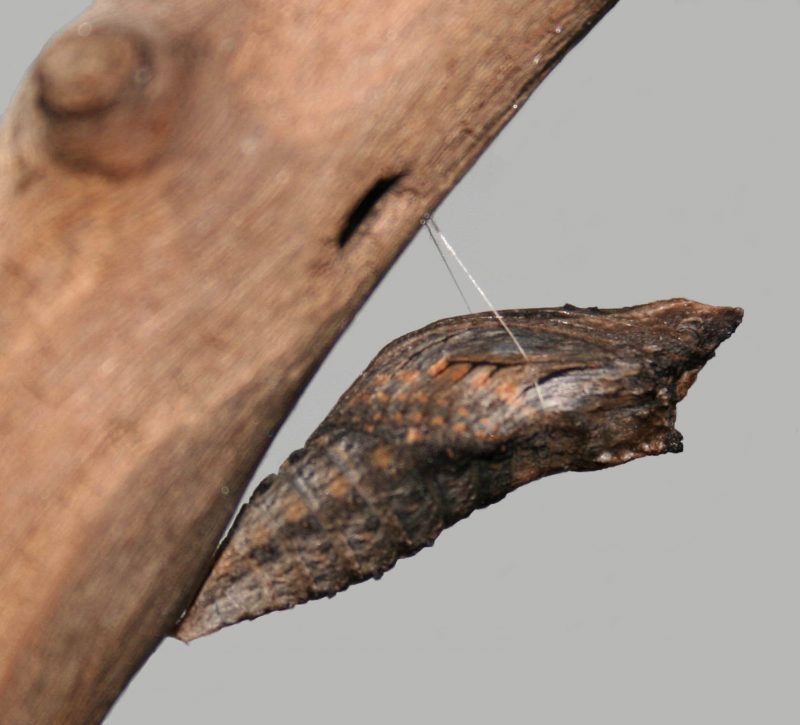
Other butterflies and moths overwinter as pupae in a chrysalis or cocoon. It’s a good idea to leave some tall standing plants in your garden so that the overwintering chrysalis of a swallowtail butterfly or the bag-like cocoon of a cecropia moth don’t get accidentally disturbed. The familiar black-and-brown “woolly bear” caterpillar is unusual – it overwinters as a caterpillar and waits until spring to make its cocoon. This species spends the winter curled up under the leaves, protected by anti-freezing chemicals in its body.
Some insects can’t survive winter as adults or pupae; instead, they lay eggs in the fall that will overwinter and hatch in the spring. Eastern tent caterpillars emerge in the spring from eggs laid by adult moths the previous fall. Grasshoppers and crickets lay their eggs in the soil, while treehoppers, which look like little thorns that can jump, lay clusters of eggs on twigs.
One insect you’ve likely seen at this time of year is the Halloween lady beetle, which often shows up in large numbers seeking warmth and protection in the cracks and corners of south-facing buildings. Boxelder bugs are also known for gathering in large numbers and finding their way inside buildings. While a nuisance, these insects don’t sting (though lady beetles may bite), and they’re not interested in eating either. Get ahead of an infestation by sealing up cracks to keep these insects from getting inside in the first place and vacuum up any that do come in.
Late fall is a great time to explore the Mississippi Regional Park without being bothered by mosquitoes or other biting insects. Curious about what’s going on at Kroening Nature Center? Check out our upcoming programs in November (registration available online).
Nature Tots: River Rocks · Saturday, November 1, 10:30-11:30 a.m. Free, ages 2-5 with an adult (activity # 21686). Come explore the different colors, shapes, and textures of the rocks along our river. Learn the stories of how they came to be here and make a rocky craft.
Creating with Buckthorn · Tuesday, November 4, 10 a.m.-noon. $9/person, ages 18+ (activity # 21703). Put those invasive buckthorn trees to use! Make your own toy, jewelry, sculpture or other creation out of buckthorn using non-electric hand tools.
Birding in the Park: Bird Profiles · Friday, November 7, 9-10:30 a.m. $9/person, ages 18+ (activity #10148). Take advantage of the bare tree branches to observe bird silhouettes and learn to identify certain birds even when color or other details are not visible.
Family Fundays: Beavers · Saturday, November 8, 10:30 a.m.-noon. Free, all ages (activity #21689). Join a naturalist to learn about beavers active in the park. Feel a beaver’s fur and skull, go on a walk to look for beaver sign, and try to build your own miniature beaver dam.
Homeschool Program: River Animals · Thursday, November 13, 1-2:30 p.m. Free for residents, ages 5-12 (activity #18890). Some mammals spend much of their time in the water. Take a closer look at these animals’ adaptations, then hike along their river habitat to look for signs they’ve left behind.
Nature Art: Seed Mosaics · Saturday, November 15, 1:30-2:30 p.m. Free, all ages (activity #21694). Seeds come in all colors, shapes, and textures. Come use your creativity to see what kind of unique mosaic picture you can craft with seeds.
Tracks and Signs · Saturday, November 22, 10 a.m.-noon. $9/person, ages 18+ (activity #21702). Learn about how to find evidence of animals, birds, and insects that make the Mississippi Regional Park their home.
Nature in Focus: Beavers – Saturday, November 22, 1-2:30 p.m. $9/person, ages 18+ (activity #21698). Beavers can’t dam the Mississippi, but they still shape the environment. Learn about the biology of these fascinating mammals, examine a beaver’s pelt and skull, then go for a walk with a naturalist to look for signs of beavers along the river.