
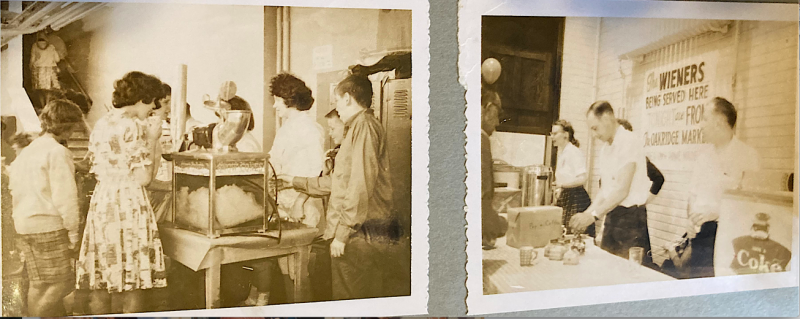

With another new school year approaching I often become a bit nostalgic, and then a chance encounter with a mom and daughter selling snacks as a fundraiser for the Loring School PTA really got me thinking about the past. I spent a lot of time as part of Northside school Parent Teacher Associations (PTAs) over the years, both as a parent and a staff person. My journey with the PTA started in the spring of 1982 when I went to the “kindergarten round-up” for Loring School with my son. Ann Kaari and Johnnie Knaus headed up the Loring PTA at that time. These two moms not only convinced me to join the PTA, but they also talked me into becoming a co-vice president. When I joined the Loring PTA in 1982, the national organization had already been around for 95 years.
Two women, Alice McLellan Birney and Phoebe Apperson, believed that mothers would support a mission to eliminate things that endangered children. In early 1897, they founded the National Congress of Mothers. Mind you this was when women did not have the right to vote and social activism by women was not popular. However, they did have support from President Theodore Roosevelt. In 1908, recognizing the importance of parent-teacher partnerships, the name of the organization was changed to National Congress of Mothers and Parent-Teacher Associations. Minnesota chartered its state PTA in 1923. In 1966, “PTA” and “Parent Teacher Association” were registered as service marks. Over the years some schools opted to become PTOs (parent teacher organizations) who weren’t affiliated with or paying dues to the national PTA, but their missions were generally the same.
In 1926, during a time of segregated schools and communities, Selena Sloan Butler formed the National Congress of Colored Parents and Teachers to advocate for African American children. The two associations fought side by side for every child during the Jim Crow era, the Civil Rights Movement and the eventual desegregation of schools. After the Supreme Court decision that ended school segregation, the associations held their conventions in conjunction with one another and they worked toward merging their organizations in all 50 states. On June 22, 1970, the two congresses signed a Declaration of Unification and officially became one association.
Here in Minneapolis, especially on the Northside, our school PTAs helped with many things. During WWII, the Penn School PTA raised nearly $40,000 to help buy jeeps, planes and an ambulance as part of the war effort and then raised $3000 for a hospital unit to “bring our boys home.” In the 1950s PTA volunteers were in the front lines of students getting polio vaccines and tuberculosis tests at school. Then in the late 1960s and 1970s they helped make sure kids received measles vaccines. For decades they would also help with vision and health screenings at our schools. Our local PTA groups also fought for lower class sizes, safe playgrounds, public library service in local schools, school patrols, safe buses and even kid appropriate movies in local theaters. They also raised funds for school field trips, books for school libraries, school equipment, classroom supplies and a lot more. When I was a PTA officer at both Loring and Hamilton schools, it was the PTA that raised the money and paid for the first student computers in the media centers.
Of course it wasn’t just serious issues that the PTAs took part in. They often were the backbone of school festivals, carnivals and picnics. They would also perform shows at the schools for families and students. Some of these performances were often down right silly, in particular ones done by the dads!
For me all those years of being part of school PTAs had added bonuses. For one thing, I made some wonderful lifelong friendships during those years of volunteering at schools. I also learned how much volunteering in my community could make a difference.